Thursday, 6 December 2012

Seto Inland Sea islands - Naoshima

After having several trips abroad, this summer I decided to do a bit of domestic travel for a change, and opted to explore some of the islands in the Seto Inland Sea, nestled between the main island of Honshu and the eastern island Shikoku. What interested me most was the island of Naoshima, an island uniquely dedicated to art museums designed by Japanese architect Tadao Ando and dotted with various outdoor instillation and other art projects, all blended beautifully and tastefully into the stunning natural setting of the island itself.
A giant pumkin by Kusama Yayoi. During a typhoon this was swept away by the waves and found bobbing in the sea the next day.
I reached Naoshima by taking the Shinkansen (bullet train) from Tokyo to Okayama, a journey of around three hours, and then took a local train for about 45 minutes to the port town of Uno, from where Naoshima is a short 20 minute ferry ride.

Wednesday, 5 December 2012

iPad equals more blog updates

Having recently purchased a brand new shiny black iPad mini, the option now arises of blogging on the go. This may inspire a few more updates from me on particularly quiet days at work, or when I'm traveling. Time will tell.

Wednesday, 22 February 2012

Jackson Pollock comes to Tokyo

It's not often that you get to see retrospective exhibitions of major Western artists in Japan, which I would guess is mainly due to the expense and the logistics of transporting the art work over long distances. So I was very pleased to get the chance to see the Jackson Pollock retrospective currently at the National Museum of Modern Art and running till May 6th. Pollock, for those who don't know, was a major American artist of the 20th century and part of the Abstract Impressionist movement. His most famous paintings are easily idetifiable by his unique drip painting technique. He would often use household enamel paint and drip or pour paint onto a flat canvas, gradually building up web-like layers of colour.

I've seen Pollock's largest paintings on show in the Museum of Modern Art in New York. None of these paintings are in the Tokyo exhibition, but they have nevertheless gathered an impressive selection of his work from all over the world, including a beautiful large painting lent, surprisingly, by a museum in Tehran.

The show is very nicely laid out and there's a good selection of paintings from all stages of his career, as well as drawings, prints and film footage of the artist in action. Immediately as you leave the exhibition there is a reconstruction of his studio with it's paint-splattered wooden floor, which you can walk around on. Also on display here are some artifacts such as a human skull, which I assume were his own possessions.

There is also the inevitable gift shop selling Jackson Pollock chocolate Macadamia nuts and Jackson Pollock bottles of wine (maybe an irony for an artist who was a life-long alcoholic and died in a booze-fueled car accident.)

Monday, 5 December 2011

Buildings of Tokyo - Nakagin Capsule Tower

Constructed in 1972 and designed by architect Kisho Kurakawa, this space-age looking building was made of inter-connected capsules, each of which was a very small fitted apartment. It's currently unoccupied and has so far survived plans for its demolition after protests by several architects. Whether it will survive long into the future is anyone's guess. This building is a short walk from Shinbashi station (8-16-10 Ginza) It was an interesting vision of the future at the time, and although it's starting to look a bit tatty now, it lead to the common capsule hotels which are seen in all Japanese cities today. The same architect, Kurokawa, later designed the first capsule hotel in Japan, which opened in Osaka in 1979.

Monday, 28 November 2011

Buildings of Tokyo - St. Mary's Cathedral

Tokyo is a city full of very modern buildings, with very little evidence of structures more than a few decades old. This is largely due to the devastating destruction the city endured twice in the 20th century; firstly in the Great Kanto Earthquake of 1923 and again in the heavy bombing experienced in World War II. The result today is not what you can really call a beautiful city, with ugly, bland, concrete buildings and housing stetched over vast areas of the city. There is, however, some interesting and bold architecture, and the fact that that there isn't any beautiful heritage to protect as in, say for example, Venice, Paris or Rome, seems to enable buildings to spring up that wouldn't be built anywhere else. I plan to visit some well-known (and lesser-known) buildings around Tokyo for this blog, starting with St. Mary's Cathedral.

This cathedral was constructed in 1964 and designed by the reknowned Japanese architect Kenzo Tange. Among his best known buildings are the Peace Museum in Hiroshima and the Olympic gymnastics stadium in Harajuku. In fact, the cathedral has a similar curved roof to the Olympic stadium.
Standing freely from the cathedral there is also a 60 metre bell tower.


The bell tower is very narrow and the bells are only visible from the side - face on all you can see is the narrowly tapered tower with a crucifix at the top.

The interior is built in grey concrete with minimal decoration. The beauty comes from the big open space and the sweeping lines converging towards the ceiling.

When Kenzo Tange died in 2005 his funeral was held, appropriately, in this cathedral. The cathedral is located in the Bunkyo district of Tokyo.

Monday, 7 November 2011

Warm November sun

One of the nice things about Japan (in the middle and south of the country, at least) is the relatively warm autumn weather, which carries on well into November. On sunny days the temperature can go over 20 degrees, and yesterday (Nov.7th) I cycled to a park and sat there for a couple of hours enjoying the warm sunshine and listening to music on my headphones

I also took 360 degree panoramic photos on a new app on my phone, which you can see here

Who is the Japanese prime minister?

It occurred to me recently that I can't remember the name of the new Japanese prime minister, and not only that I don't even know what he looks like. I honestly wouldn't be able to pick him out in an identity parade. Prime ministers change here as regularly as teenage girls in Shibuya change their shade of nail varnish. Since I moved to Japan in 2003 I have no idea how many prime ministers there have been and would be hard pushed to name half of them. Maybe I don't need to get to know what the new one looks like - the new one will probably be along before I've returned from my Christmas holiday.

Tokyo Halloween

When asked about Halloween most Japanese say "we don't celebrate it here" - ignoring the fact that almost every shop, cafe and public place is decorated with images of pumkins, witches and black cats. Like with the globalisation of a lot of things, it does seem to be becoming more popular here and at night I noticed quite a few people in costumes heading off to various bars and parties. Japanese Halloween is basically fancy dress - any fancy dress. Dress up as a nurse, a pirate, a cartoon character, it doesn't seem to matter. I suppose it makes a change from hundreds of Scream masks and Draculas.

As always I went out for drinks in Shinjuku with my friend, Gary, who always spends hours making incredibly detailed masks weeks in advance. I borrowed a kimono and bought a black wig and face paint and went as...I don't know what it was really, but it was based on images of kabuki theatre. Other random costumes I saw were guys dressed as white swans, with long balloons for the tails and a girl dressed as the Starbucks logo. Like I said, any resemblance to a "normal" Halloween theme seems to be completely optional.


Thursday, 27 October 2011

Adventures in Kansai, part 4 - Kobe

Kobe is a port city with a large harbour area on one side and mountains on the other. The city gives its name to the famous and very expensive Kobe beef, which I saw no examples of anywhere (not that I was looking) and of course it's probably most famous for the devastating earthquake which struck the city in 1995. There is a museum documenting this event, and had I been passing by I probably would've gone there, but as it was in a different area to where I was I just decided to stroll around the city and enjoy the warm autumn sunshine.

My first stop was Chinatown, where I had an early lunch. This is one of the three main Chinatowns in Japan, the other two being in Yokohama and Nagasaki. I've been to all three. I suppose there's not a great deal of difference between any of them, but they're interesting to see nonetheless.


From Chinatown it's a short walk to the harbour, with it's pleasant wide open areas (something of a rarity in Japanese cities.)

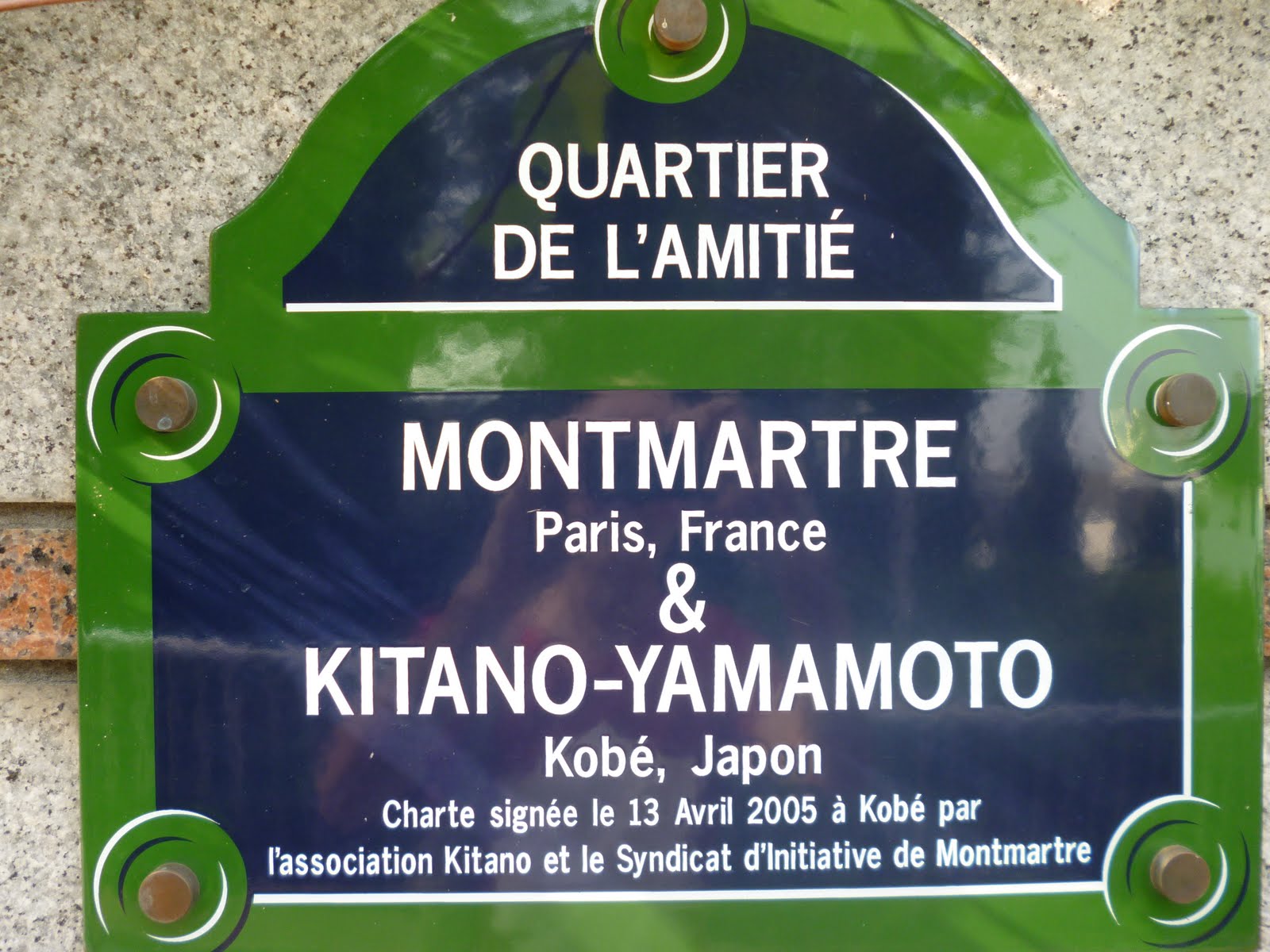
From there I walked back through the centre of the city and headed uphill to the area called Kitano. This is a very wealthy and fashionable area. There are many old Western style houses here, built in the days when Kobe was an important trading port and many Westerners settled here. These houses are very well preserved and some of them are open to the public. It's twinned with Montmartre in Paris, presumably for the similar hillside location, although it's not really quite the same thing. However, it appeals to people who want to have a flavour of European sophistication without actually having to get on a plane (or speak another language.)


Wednesday, 26 October 2011

Adventures in Kansai, part 3 - Kyoto

I've been to Kyoto several times before, but there are so many sights scattered far and wide that it's always possible to see something new with each visit. For this visit my first stop was Fushimi Inari, a shrine easily reached five minutes by train from the main Kyoto station. The shrine is famous for the hundreds of red torii gates which you pass under on the many paths through the area, and the curious looking stone foxes which stare down at you from all around.


I then stopped for lunch at one of the many tiny little restaurants in the city. When I say tiny, I mean the seating area is usually just at a counter sitting right in front of the staff as they prepare your food.

The entrances of these restaurants often have "noren" hanging down, a cloth printed with the name or logo of the establishment.


Although it can seem an intimidating prospect going into these small Japanese restaurants if you don't speak the language, I strongly recommend that visitors give them a try. if there's not an English menu there's usually a menu with photos - just point! These places are much more interesting than the usual array of Western chain restaurants around the very large and modern main Kyoto station.

My next stop was a temple called Sho-ren-in. When I went here I was almost the only visitor so it was very peaceful and quiet. The temple has many rooms and some beautiful hand-painted screens on the walls and a large garden area which you can walk around. There was a light drizzle falling as I walked around the green moss-covered garden, very atmospheric and relaxing.


The final part of my day was spent wandering around Gion, the traditional area of the city where you see many old wooden houses, and following the winding paths up to Kiyomizu temple. This is one of the most touristy parts of the city, and when I was there seemed to be literally overrun with hoards of school kids. It's still worth seeing, but when you visit the city it's also well worth seeking out some of the less crowded places to really appreciate the atmosphere of the city.

Tuesday, 25 October 2011

Adventures in Kansai, part 2 - Koya-san

After a couple of days in Osaka I was ready to get out of the city. I decided to head to Koya-san, a place I'd never been to before, or even heard of before reading about it in my guide book. It's in an area of Japan known as the Kii peninsula, a rural area of forested mountains. I took the train from Namba station in Osaka for the one and a half hour ride to Gokurakubashi station, passing through some very nice scenery along the way. Then I boarded a small cable car for a short ten minute climb to Koya-san station, around 800 metres above sea level. After that I bought a day bus pass for 800 yen, so I could hop on and off the buses which circulate around the main sights.

My first stop was Okuno-in, an area of over 200,000 tombs and mausoleums - the largest graveyard in Japan. Some of the burial mounds are hidden in the forest and covered in green moss and obviously very old, there are also some interesting statues and it's a very atmospheric place to wander around, epecially in the moments of peace when there are no other people around and you can't hear a thing except the sounds of the forest.


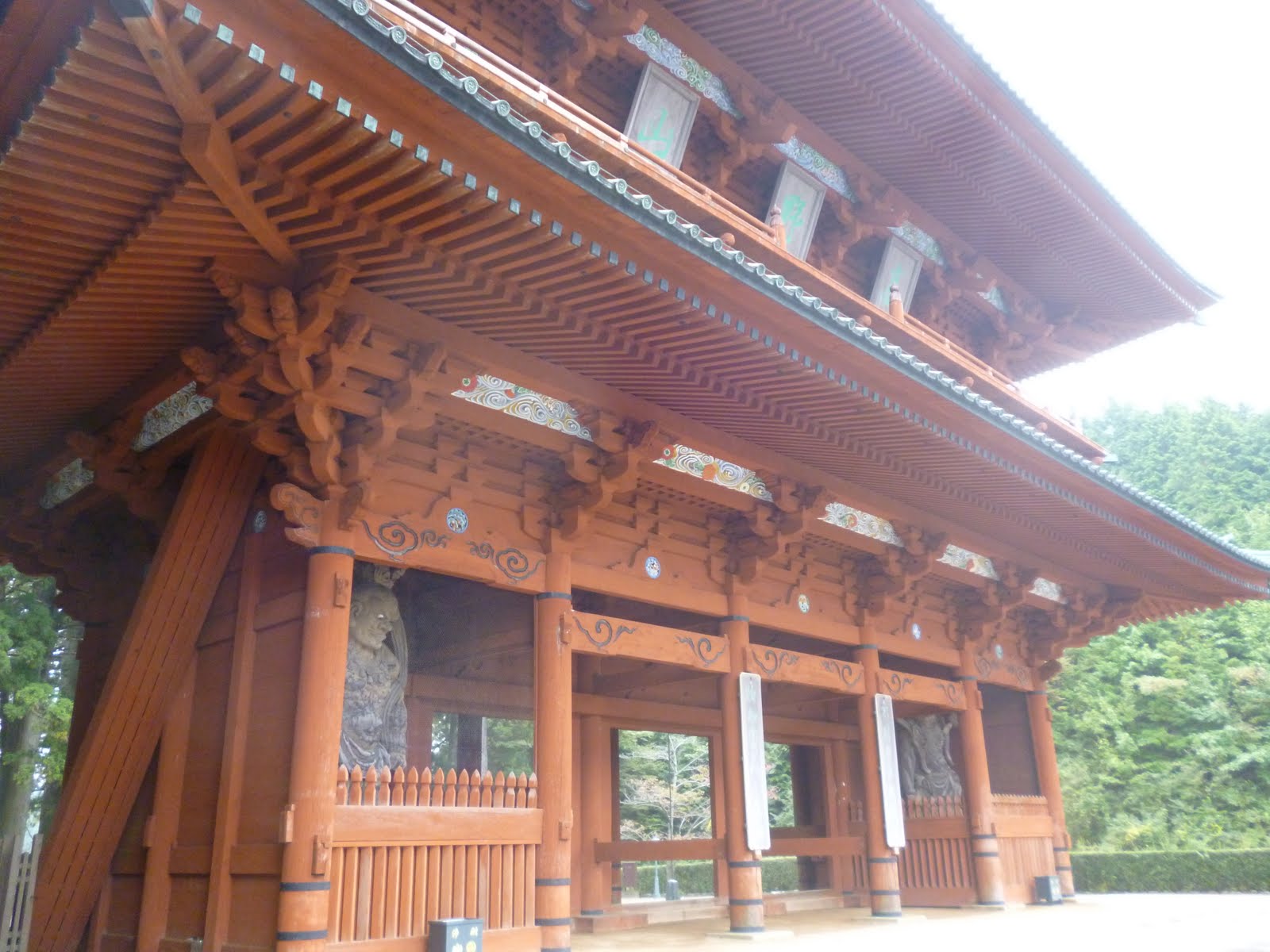
I also saw a few temples and a large gate called Daimon, which marks the main entrance to Koya-san.


Finally, I went on a short hiking trail, passing under quite a few traditional red torii gates, and with occasional views of the sprawling countryside below. Supposedly on a clear day you can see as far as the island of Shikoku, but I couldn't see that far.


As the buses weren't very frequent (sometimes more than an hour between buses) I decided to call it a day after the short hike. I'm sure there must be a few sights I missed out, and it may be worth doing this area with an overnight stay and two days to take in the sights. In any case, it's well worth a visit.

Thursday, 20 October 2011

Adventures in Kansai , part 1 - Osaka

The Kansai region is the second most populated area of Japan after the Kanto (Tokyo) region, with the three main cities of Osaka, Kyoto and Kobe all within about 30 minutes train ride of each other. As I had a week off work in October I decided to take the bullet train for the two and half hour ride from Tokyo to Osaka and spend a week in the region. I've been to this area three or four times before, so as well as enjoying some familiar places I already knew I also wanted to discover a few new places. My hotel was a "business hotel" - in reality a cheap, slightly shabby hotel with tiny rooms. Quite what is "business" orientated about it I don't know, but it seems to be a name they use in Japan for a certain type of low price hotel with the bare minimum of facilities.


Osaka is a vibrant, noisy and colourful city. Similar to Tokyo, I suppose, but also with it's own feel. One of the famous things to eat here is takoyaki, which you can buy at street stalls over the city. They are octopus fried in little balls which are then slathered in mayonnaise and other sauces and eaten with little cocktail sticks.


The takoyaki places are easily visible due to the often very large and ornate octopus signs and decorations hanging above the premises.


In fact, the shops and restaurants in Osaka do have some amazingly eye-catching facades, with extraordinary fibre-glass creations such as dragons, giant crabs with moving pincers, huge cartoon faces all competing for the attention of passersby.


you see sights like a ferris wheel on top of a building, or a giant 30 foot red whale in a shopping mall.


It's quite a crazy place, good fun, but it can get tiring. If you're not into city life then Osaka is really not for you. If that's the case then one good thing about Osaka is that peace and tranquility, and a more traditional Japanese way of life, isn't too far away.

Sunday, 25 September 2011

My first record player

I got my first record player when I was about nine or ten years old, passed on to me, I think, when my parents replaced the stereo in the living room with a newer one and I was allowed to have the old one in my bedroom. It was a big chunky box with a heavy wooden lid on top which you had to lift up to put the records on. In those days (around 1975) televisions and record players were designed to look like proper furniture, with dark wooden veneers and so on. There were three speeds on it - 33, 45 and 78rpm. Vinyl albums, of course, played at 33rpm and 7 inch singles at 45rpm. The 78rpm setting was already fairly obsolete at this time, used only for old style discs which were made of a hard shellac (which shattered if you dropped them.) I was actually given some of my grandmother's old 78's. I can't really remember the songs, but one of them was the Ugly Duckling song. Of course, as a child I enjoyed the novelty of playing records at the wrong speed, or putting my finger on the record and playing it backwards. Among the first records I had was Abba's Greatest Hits, which came in a gatefold sleeve. The cover showed the four of them sitting on a park bench; on the front Bjorn was reading a paper while Agnetha stared vacantly ahead looking vaguely sad, and on the back Benny and Frida were embraced in a kiss, which was slightly racey to my young eyes. After that I collected all the Abba singles, eagerly buying them at the local record store each time a new one came out. I always enjoyed the B sides too. Nowadays downloading is undoubtably convenient, you can get what you want when you want, but I don't feel like I own the music in the same way as when it was a physical product which can be handled and touched and looked at.